
Get Comfortable With the Craps Table Before Playing
 Available in US
A practical introduction to dice outcomes, table bets, virtual credits and mobile practice, with a clear distinction between demos and cash play.

What Free Online Craps Lets You Practise
Craps is a dice game in which players wager on the result of a pair of dice. If you are new to it, a free online version can offer a way to become familiar with the game’s basic ideas before deciding whether you want to learn more. Many online table-game collections include craps among the games available for practice, though the selection depends on the site.
In a demo game, you play with virtual credits rather than money you can withdraw. Those credits are not a cash balance: they cannot be exchanged for NZD, and a favourable result does not become a real-money win. The distinction matters. A game may look and feel like a casino table, but a practice balance has no monetary value.
That makes free play useful for learning at your own pace. You can observe how the game is presented, read the labels on the table and get used to the idea that wagers are made on possible dice outcomes. You can also learn the rules without risking money. The purpose is familiarity, not a way to build funds or test a guaranteed system for winning.
If you’re looking for free craps in New Zealand, check the details that are actually available before deciding where to play. These short verdicts stick to the supplied information and do not assume that a particular operator offers free craps.
-
Neospin
- License
- Tobique Gaming Commission, licence no. 0000064
You can note that Neospin lists a Tobique Gaming Commission licence, number 0000064. No details about its craps games or free-play options were provided.
-
BitStarz
- License
- Curaçao Gaming Authority, licence no. OGL/2024/165/0185
BitStarz lists a Curaçao Gaming Authority licence, number OGL/2024/165/0185. The supplied information does not specify whether free craps is available.
-
Ricky Casino
- License
- Tobique Gaming Commission, licence no. 0000002
Ricky Casino lists a Tobique Gaming Commission licence, number 0000002. No information was supplied about its craps games or free-play options.
-
Zotabet
- License
- 07017519840
- Payout speed
- 1-3 business days
Zotabet lists the identifier 07017519840 and a payout speed of 1–3 business days. The information provided does not say whether it offers free craps.
-
7Bit Casino
- License
- Tobique Gaming Commission, licence no. 0000091
7Bit Casino lists a Tobique Gaming Commission licence, number 0000091. No details about free craps were provided.
-
Wintino
- Payout speed
- 1-3 business days
Wintino lists a payout speed of 1–3 business days. The supplied information does not describe its craps or free-play options.
-
Lamabet
- Payout speed
- 1-3 business days
Lamabet lists a payout speed of 1–3 business days. No information was supplied about whether you can play craps for free there.
-
Play Grand
- License
- Malta Gaming Authority, licence no. MGA/B2C/370/2017
Play Grand lists a Malta Gaming Authority licence, number MGA/B2C/370/2017. The supplied details do not confirm whether free craps is available.
-
N1 Casino
- License
- Malta Gaming Authority, licence no. MGA/B2C/394/2017
N1 Casino lists a Malta Gaming Authority licence, number MGA/B2C/394/2017. No information was provided about its craps games or free-play options.
A craps table can seem busy at first because it displays different betting options at once. In a free game, there is no need to treat every option as something you should use. You can take time to understand what the screen is showing and how a choice relates to the game, rather than placing wagers simply because they are visible. The practice remains useful even if you focus on understanding the general layout instead of trying every bet.
Free play can also help separate two questions: whether you understand the game, and whether you want to risk money on it. A demo can help with the first. It cannot answer the second for you, and it does not make real-money play safer or more predictable. The dice outcomes remain uncertain; time spent practising does not turn chance into a dependable method.
Keep that limit in view if you later consider playing for money. Bet only what you can afford to lose, and decide on a loss limit in NZD before you begin. Stick to that limit rather than treating a demo balance, a run of favourable results or time spent learning as a reason to raise it. Excessive gambling can cause serious harm, including financial and personal problems. If gambling stops feeling manageable, stop and seek support.
The word “free” can also create a misleading impression if it is taken to mean that every game or feature is available without cost. In a demo, the relevant point is that the play uses virtual credits and does not put your money at stake. It is not a cash prize opportunity. Nor does practice guarantee that a particular version will be available wherever you visit; sites vary in what they offer.
Some versions may present additional wager types alongside the basic choices. Their presence on a screen is not a sign that they are sensible bets. Proposition bets have poor odds and a high house edge, so treat them with particular caution rather than as an easy route to a win. A practice game can show what an option looks like, but seeing it in a demo does not improve its odds.
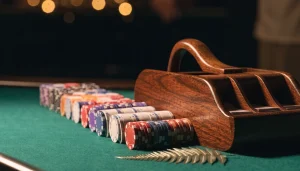
Approach a craps demo as a learning aid with a clear boundary: it can help you become more comfortable with the game and its terminology, while its credits remain fictional and its results have no cash value. That is a modest purpose, but a useful one. You can learn without risking NZD, provided you do not mistake simulated play for a promise about what will happen if money is involved.
Craps Without a Download: What Happens Online
“Without a download” describes how a game is accessed, not a separate set of craps rules. In a browser-based format, the game runs through a web page rather than requiring you to install a program first. That does not mean every online craps game is available this way: access methods vary, and you should check the details of the game you are considering rather than assume it will open in a browser.
The main difference from a physical table is what happens around the dice. At a casino table, people carry out distinct roles: a shooter rolls, while other staff manage the game and its equipment. Online, software automates the functions of those positions. You make choices through the game interface; the system handles the corresponding table operations. The underlying game remains craps, but the people and physical table are replaced by a digital process.
That automation can make the format feel less like a crowded table and more like a sequence of prompts and actions on screen. The interface presents the available choices, records the selections you make and advances the game when the required action is taken. It also handles the dice outcome within the game. These are functions of the online format, not evidence that a particular game is downloadable or browser-based.

A physical table gives you visible cues: the layout, the position of the dice and the activity of the staff. A digital interface has to represent the relevant information on screen instead. The details depend on the game, so do not assume that every layout, animation or control will look the same. What matters is whether you can identify what the interface is asking you to do and see the outcome of your action before proceeding.
The word “download” can also refer to different things. A game may open directly in a browser, or it may ask you to install an app or other software. A website may also require a separate account or other access steps, independently of whether a game itself is installed. Those are different parts of the experience. A claim that a game is online does not, by itself, establish that it needs no installation; equally, a browser interface does not tell you what the site’s other requirements are.
If you are looking for craps for free without a download, keep the two questions separate: how the game is accessed, and whether it is free to play. A browser-based game is not automatically a free game, and the absence of an installation does not tell you whether play involves real money. Check the game’s displayed mode and terms before you start. Do not rely on a label alone to infer what happens to any funds or credits.
The automated format can be useful for understanding how a digital table responds to your choices, but it does not remove the need to follow the game. Online controls may differ from a physical layout, and an animation can move quickly. Take time to read the screen rather than treating the interface as a substitute for understanding the rules. If anything is unclear, stop before making a selection.
There is also a practical difference between observing an automated game and taking part in it. In an online setting, the system applies the game’s processes and credits funds automatically. You do not need a person at the table to carry out each action, but you remain responsible for the choices you make. Automation is not a safeguard against losses, nor does it make outcomes predictable.
Before any real-money play, set a loss limit in NZD and stick to it. Bet only what you can afford to lose, and do not try to recover losses by continuing. Excessive gambling can cause financial and personal harm; if play becomes difficult to control, step away and seek support. These cautions apply whether a game is accessed through a browser or installed software.
A no-download format is therefore best understood as an access option, not a promise about a particular game or a shortcut around the rules. Online craps automates the functions performed by table positions, while the interface presents the actions and outcomes digitally. Check how a specific game is accessed and what kind of play it offers before proceeding, since neither detail can be inferred simply from the words “online” or “without a download.”
How to Play a Free Craps Round
Craps is played with a pair of dice. You place a bet on an outcome, then the shooter rolls to begin the round. The first roll is called the come-out roll. For a basic introduction, the Pass line is the clearest bet to follow because its result depends on this opening roll and, if necessary, the point phase that follows.
The come-out roll
A Pass line bet wins immediately if the come-out roll is a 7 or 11. These results are called a natural. If the roll is 2, 3 or 12, the Pass line bet loses; this is known as crapping out.
Any other come-out result—4, 5, 6, 8, 9 or 10—sets the point. The opening roll has then established a target number, and the round continues rather than ending. Keeping track of that target is the main task in the next phase.
If you are learning to play craps free, watch which number becomes the point before following the later rolls. The dice do not need to land in the same combination as before: the relevant result is the total shown by the pair.
The point phase
Once a point is established, the shooter rolls again. The aim for a Pass line bet is to see that same point appear before a 7. If the point comes first, the Pass line bet wins. If a 7 comes first, the Pass line bet loses and the round ends.
Pass Line Round
-
1
The Come-out Roll
The shooter rolls the dice. If the total is 7 or 11, the Pass line bet wins immediately; if it is 2, 3, or 12, it loses.
-
2
Establishing the Point
If the roll is 4, 5, 6, 8, 9, or 10, that number becomes the point, and the round continues.
-
3
The Point Phase
The shooter rolls again. The bet wins if the point is rolled again before a 7 appears; if a 7 is rolled first, the bet loses.
This sequence continues while neither result has appeared. Each new roll gives the shooter another chance to make the point or roll a 7; other totals do not settle the Pass line bet. So the round is not decided by the point being rolled once and then forgotten. It remains the target until it appears or a 7 ends the attempt.
A simple way to follow a free craps practice round is to note three things: whether the roll is still the come-out roll, what the point is if one has been set, and whether the point or 7 appears first. That is enough to understand the basic Pass line outcome without trying to track every possible wager on the table.
Following the basic outcomes
For the Pass line, the sequence is:
- Come-out roll of 7 or 11: the bet wins.
- Come-out roll of 2, 3 or 12: the bet loses.
- Come-out roll of 4, 5, 6, 8, 9 or 10: that total becomes the point.
- After a point is set: the Pass line bet wins if the point returns before 7; it loses if 7 appears first.
A Don’t Pass bet follows the opposite result in the point phase: it wins if 7 is rolled before the point. This contrast can help explain why the same roll may be favourable to one bet and unfavourable to another.
Practice can make the sequence easier to recognise, but it does not predict future dice results or provide a system for winning. If you move from practice to gambling, set a loss limit in NZD beforehand and stick to it; bet only what you can afford to lose. Gambling can cause financial and personal harm, and excessive play is a risk to take seriously.
Free Craps in New Zealand: Play and Regulatory Context
A free demo can give you a way to practise craps without putting NZD at risk. Its virtual credits are for play, not money you can withdraw or win. That distinction matters: a demo is not the same as wagering with an online casino, and it does not tell you whether a particular provider is licensed to offer real-money gambling in New Zealand.
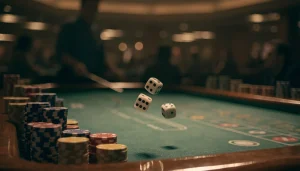
The legal position changed in 2026. The Online Casino Gambling Act 2026 came into force on 1 May 2026 and created New Zealand’s first domestic licensing system for online casino gambling. The Gambling Act 2003 had not allowed online casinos to be based in New Zealand. Before the new Act, offshore online casino gambling was not licensed or supervised by a New Zealand regulator, leaving customers without domestic government recourse if a dispute arose.
The new system has a transition period. Online casinos that were already serving people in New Zealand before 1 May 2026 may continue operating until 1 December 2026 under the transitional provisions. Providers that have not applied for a licence by then must stop conducting online casino gambling in New Zealand. The full licensing regime is not expected to be operational until 2027, and unlicensed operation is expected to become an offence around mid-2027.
During the transition, providers must not advertise online casino gambling to people in New Zealand. The rules also set consequences for operators: unlicensed providers may face enforcement action and fines of up to NZ$5 million. If a provider’s licence application is declined, it must stop online casino operations in New Zealand and leave the market. These obligations concern providers; they do not make a player liable to a fine or prosecution for using an offshore casino.
Regulatory responsibilities are divided between two bodies. The Department of Internal Affairs has an oversight role in the online casino licensing framework. The Gambling Commission decides casino licensing applications, issues online casino licences and approves changes to licence conditions. A demo session, by itself, does not establish that a related real-money service has been approved under this framework.

If you are considering gambling for money, do not treat a free session as evidence that a provider is safe or licensed. Bet only what you can afford to lose, set a loss limit in NZD before playing, and stick to it. Excessive gambling can cause financial and personal harm; free practice does not remove that risk if you later move to real-money play.
Using a Craps Simulator to Learn the Table
A casino-style craps simulator can give you a place to become familiar with the table before deciding whether the game suits you. Its value is not that it predicts a result or makes a wager safer. It lets you explore the game’s layout and see how a digital table responds while you practise with virtual credits rather than money you can withdraw or win.
That distinction matters. A simulator can help you recognise the main areas of the table and understand that different wagers relate to different parts of a round. You can take time to read labels, consider what a control does and notice how the interface changes as play progresses. This can make the table feel less unfamiliar, particularly if its layout initially seems crowded.
The setting is still a simplified learning environment. Virtual credits do not represent funds in an account, and a simulated result does not show what you would have won or lost with real money. Nor does a simulator guarantee that every table, display or set of options will work in the same way elsewhere. Treat it as practice with an interface, not as a promise about a particular casino game.
A free craps simulator is most useful when you give yourself a clear learning aim. You might focus on identifying the areas where wagers are placed, following the change in the table as a round develops, or learning the names used for different choices. There is no need to rush through the interface. If you cannot tell what a control represents, pause and look for an explanation rather than selecting it at random.

The limits are as important as the benefits. Practice can improve familiarity, but it cannot remove the uncertainty of dice outcomes or turn a wager into a reliable source of income. A run of simulated results is not evidence that the same pattern will continue, and virtual credits are not a bankroll. The simulator teaches recognition and routine; it cannot teach you how to guarantee a win.
If you later choose to gamble for real money, decide beforehand what amount in NZD you can afford to lose and set that as your loss limit. Bet only what you can afford to lose, and stop when you reach the limit. A free practice session is not a reason to increase spending or to chase losses. Gambling can cause financial and personal harm; if it is becoming difficult to control, step away and seek support.
Used with those limits in mind, an online casino-style simulator can make the table easier to understand without putting money at risk. Its purpose is modest: help you learn the interface and become more comfortable with the terminology. It does not replicate every real-money condition, forecast outcomes or make later gambling a safer financial choice.
Free Craps Software and Virtual Credits
“Free” describes the credits used in a demo, not money available to you. They are virtual: you cannot withdraw them, convert them into cash or claim them as winnings. A balance shown on screen may make it easier to follow a session, but it has no monetary value outside the game.
That distinction matters when you look for craps software free to use. The phrase can refer to a game interface running with practice credits; it does not establish that a particular downloadable program exists or that every game can be accessed in the same way. Nor does a virtual balance function like a deposit or a prize. Treat it as a learning aid, not as a source of funds.
A free demo can let you practise craps without risking NZD. You can get used to how the game responds to your choices and become more familiar with its terms, while accepting that the credits are only part of the demonstration. They do not show what you might win with real money, and a successful practice session does not predict a later result. There is no free craps strategy that can turn demo credits into a reliable route to cash.

The same caution applies if you are interested in crapless craps. A request to play that format online without payment does not make it a cash game, and the word “free” does not promise that a particular version is available. If you do encounter a demo, its virtual balance remains separate from real funds and cannot be cashed out.
Demo terms can also differ from the meaning of “free” itself. Official sources do not publish a general set of conditions for every such game, so do not assume that credits can be transferred, retained or redeemed. Read the information shown for the specific game rather than treating a displayed balance as money you own.
Practice play avoids financial loss within the demo, but it does not remove the risks of gambling with real funds later. If you choose to gamble, set a loss limit in NZD before playing and stick to it; bet only what you can afford to lose. Stop if gambling begins to affect your finances, wellbeing or relationships. Excessive gambling can cause serious harm, and practice credits are not a safeguard against that risk.
Craps Table Layout: Where Bets Fit in the Round
A craps table is organised around the shooter, the player who rolls the dice, and the betting areas where players place wagers. Its sequence has two phases: the come-out phase and the point phase. Understanding when each area is used helps you follow the round, whether you are watching a table or trying a free craps game.
Before the come-out roll, a player who wants to be the shooter must place at least the table minimum on either the Pass line or the Don’t Pass line. These are the main betting areas for that opening stage. The minimum is set by the table, so check it before placing a wager; there is no single amount that applies to every table. Other players can also choose a line, but the shooter’s minimum requirement is the relevant condition for taking the dice.
Do
- Check the table minimum before wagering
- Place a minimum bet on the Pass or Don't Pass line to be the shooter
- Use a free game to learn the relationship between round phases
Don't
- Assume a single minimum amount applies to every table
- Stake real NZD without setting a loss limit
- Mistake virtual credits for withdrawable money
The shooter then makes the come-out roll. If it establishes a point rather than settling the opening bets, the round moves into its point phase. The point is a number the shooter must roll again before a 7 for Pass line bets to win. This change in phase matters to the layout: the main line bets remain relevant, while additional betting choices can become available.
Once a point has been established, players may place further bets, including proposition bets. These sit apart from the main line wagers in the logic of the round: they are additional choices, not a requirement for taking part. A table’s marked areas help distinguish those choices, but the presence of a space does not make a wager suitable for every player. Proposition bets have poor odds and a high house edge, so treat them cautiously rather than as a way to improve your chances.
A free craps game can help you get used to the relationship between the two phases and the betting areas without staking NZD. It does not change what a table minimum means, or turn virtual credits into money. Before playing for money, set a loss limit in NZD and stick to it. Bet only what you can afford to lose, and avoid play that is becoming difficult to control; excessive gambling can cause serious harm.
Free Online Craps and Proposition Bets
A free online craps simulator can be a way to explore how different wagers appear alongside the main game. Some players look for special bets such as Fire Bet, but a name or description should not be taken as proof that a particular simulator offers it. Features vary, and no specific version is being recommended here.
Proposition bets are wagers on particular outcomes, often resolved over a short part of the game. Their focused appeal can make them look simple, but the important point is the risk: proposition bets have a high house edge. The house edge is the mathematical advantage built into a casino game over time. A high edge means the bet is comparatively costly to the player over repeated play; it does not predict the result of any individual roll.

A virtual table can make the layout and wording of a special wager easier to inspect without staking money. That is useful for understanding what the bet concerns, but it does not improve its underlying odds or make a result more predictable. Nor does a successful run in a simulator show that a bet is a reliable way to win. Dice outcomes remain uncertain, and no system can guarantee a profit.
Before using any simulator, distinguish practice from gambling for money. Virtual play can help you become familiar with the display, but it cannot show how you will feel when real funds are at risk. If you choose to gamble elsewhere, bet only what you can afford to lose, decide on a loss limit in NZD before you start, and stick to it. Do not chase losses or treat a special bet as a shortcut to a win.
Excessive gambling can cause financial and personal harm. If play begins to feel difficult to control, stop and seek support rather than continuing in the hope of recovering losses. A free table may remove the immediate cost of a practice session, but it does not remove the risks that arise when gambling shifts to real money.
The sensible use of a simulator is therefore narrow: examine how a wager is presented and learn its basic purpose, while keeping its risk in view. A prominent label or animated result is presentation, not evidence that the wager offers favourable value.
Craps Odds: Pass Line and Free Odds
Pass Line bets and Free Odds are the options identified here as having a lower house advantage. That is a comparison of the bets, not a promise that either will make a round profitable. The house advantage describes the casino’s mathematical edge over repeated play; it does not predict what will happen to your next wager.
A Pass Line bet is settled according to the result of the come-out roll and, when a point has been established, whether the point or a 7 comes first. Free Odds are an additional wager associated with a Pass Line bet after a point is set. They are distinct from the original Pass Line stake, so consider how both wagers affect the amount you have at risk.
The phrase “free odds” can be misleading. It does not mean a complimentary bet, virtual credits, or a wager with a guaranteed return. Before placing one, check how the game explains its odds wager and payout. Rules and presentation can differ between games, and a calculator cannot remove uncertainty: it can only help you examine figures based on the assumptions entered.
A craps Free Odds calculator may be useful for comparing hypothetical wagers, but its result is not a forecast of a session. Check that its settings match the game you are considering, and treat any output as an illustration rather than advice. A lower house advantage still leaves the possibility of losing the stake.
Do not add a Pass Line bet after the come-out roll. Decide on your approach before play begins, set a loss limit in NZD, and stick to it. Bet only what you can afford to lose; neither Pass Line nor Free Odds is a system for overcoming chance. If gambling stops feeling manageable or begins affecting your finances or wellbeing, pause and seek support. Excessive gambling can cause serious harm, even when individual bets seem small.
Practising Craps on a Phone
A phone can be a convenient place to practise craps rules, provided the game is clearly marked as a demo. Demo play uses virtual credits rather than money you can withdraw or win. You can learn how the game responds to different dice outcomes without risking NZD.
A free craps app may recreate the table on a smaller screen, so check whether the labels and controls are easy to follow. The point of practice is to understand the rules and the choices presented, not to treat virtual results as a way to predict future rolls. Dice outcomes remain uncertain, and a run of demo wins says nothing about what will happen in another round.
Before playing, confirm that you are in a demo rather than a real-money mode. Do not enter payment details just to practise. If you move on to gambling for money, set a loss limit in NZD beforehand, stick to it, and bet only what you can afford to lose. Excessive gambling can cause financial and personal harm; take a break if play stops feeling manageable, and seek support if you are concerned about your gambling.
An app’s presence on a phone does not make its play harmless if real-money betting is enabled. Keep practice separate from gambling, and use virtual play for learning rather than as evidence that a strategy will produce a profit.
Where can you play craps?
You can find craps in many online table-game collections, including free demo libraries. Availability varies by site.
What are the basic rules of craps?
Players bet on the outcome of two dice. On the come-out roll, a 7 or 11 wins a Pass line bet, while 2, 3 or 12 loses; any other listed point number must be rolled again before a 7 for the Pass line bet to win.
How do I become a better craps player?
Practise in a free demo to learn the rules and get familiar with the table layout without risking money. Practice can improve your understanding, but it cannot make dice outcomes predictable.
Casino Games in New Zealand: Rules and Options
Content created by the «casinoslotguidenz.com» team